
Northern Nevada Mortgage Resources for Home Buyers
Buying a home isn’t just about finding the right property — it’s also about finding the right loan

1. Local Mortgage Contacts in Northern Nevada
To help you get started, I've put together a list of licensed lenders who serve homebuyers throughout Northern Nevada. This list is provided as a resource only — you're free to work with any licensed lender you choose. Use this as a starting point to explore your options, compare rates and terms, and find the best fit for your needs.

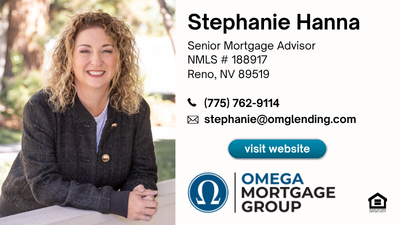
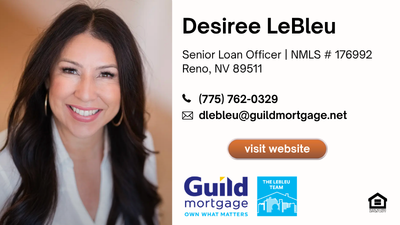
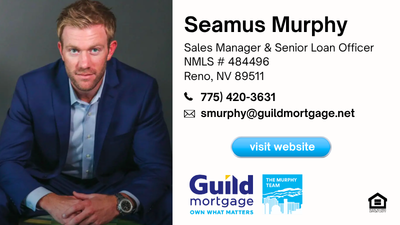
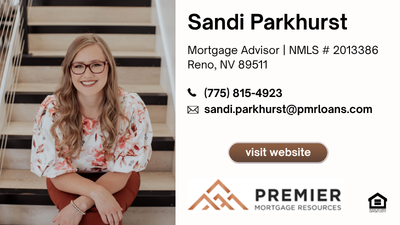

Important to know: The lenders listed here are professionals I’ve met through the Northern Nevada real-estate community. I do not receive referral fees or compensation for including any lender in this resource. I am not a mortgage professional and do not provide lending advice. This information is for educational purposes only and does not guarantee loan approval, interest rates, or terms.
These local lenders are independent professionals. You're encouraged to consult with multiple lenders and select the one that best fits your needs. Please verify all licensing through the NMLS Consumer Access website.

2. What Northern Nevada Buyers Should Know Before Talking to a Lender
Before shopping for a loan in Reno, Sparks, Carson City, or Lake Tahoe, keep these regional factors in mind. Understanding how our local market differs from other parts of the country will help you ask better questions and avoid surprises during the loan process.
No State Income Tax
Nevada residents benefit from no state income tax, which means more money in your pocket each month. While lenders calculate debt-to-income ratios using your gross income (before any taxes), the extra take-home pay makes it easier to save for your down payment, build reserves, and manage your monthly mortgage payment comfortably.
Property Tax Caps
Nevada calculates property taxes based on assessed value, not market value, which often means your tax bill is lower than you might expect coming from other states.
Annual increases are capped at 3% for primary residences and 8% for non-primary properties. Let your lender know how you plan to use the property so your escrow estimates are accurate from the start.
How Regional Factors Affect Appraisals
Northern Nevada encompasses diverse markets—from mountain properties to desert homes to lakefront estates. Working with lenders and appraisers who understand these regional differences helps ensure valuations that reflect current local market conditions.
Jumbo Loan Limits
In Washoe County, the conforming loan limit for single-family homes is currently $832,750, allowing buyers to borrow up to that amount using standard conventional financing. Link to the Federal Housing Finance Agency — FHFA Conforming Loan Limit Values Map
Weather Considerations
Winter weather in the Tahoe/Incline Village area can occasionally impact inspection and appraisal scheduling. Build extra time into your timeline if you're purchasing during winter months, and discuss rate lock periods with your lender accordingly.
Short-Term Rentals
If you're considering a property with short-term rental potential, ask your lender upfront how projected rental income is treated for qualification purposes. Different loan programs have different guidelines, and some may not count anticipated Airbnb or VRBO income.
Rate Buy-Downs
Sellers may offer to buy down your interest rate, temporarily or permanently. Your lender can help you compare this option against a price reduction to see which works best for your situation.
Pre-Approvals with Strong Track Records
In competitive markets, sellers and their agents appreciate pre-approval letters from lenders with solid reputations for timely, reliable closings. Discuss with your lender how their pre-approval process and track record can help strengthen your offer.
3. Key Mortgage Terms Explained
When you start talking with lenders, you’ll hear a lot of industry terms that can feel overwhelming. To make those conversations easier, here’s a plain-language guide to the most common mortgage words you’ll come across. Understanding these ahead of time will help you ask the right questions and feel confident comparing loan offers. If something feels unclear, it’s always okay to pause and ask your lender to walk you through it.
APR (Annual Percentage Rate)
The total cost of your loan each year, including interest and most fees. Helpful for comparing lenders.
Rate Lock
An agreement that holds your interest rate for a set time while your loan is being processed. Ask your lender how long locks last and what happens if it expires.
Points (or Discount Points)
Optional fees you can pay upfront to lower your interest rate. Worth asking if buying points makes sense for your situation.
PMI (Private Mortgage Insurance)
Extra insurance often required if your down payment is under 20%. Ask when it applies, how much it costs, and when it can be removed.
LTV (Loan-to-Value Ratio)
The loan amount compared to the home’s value. Lenders use this to gauge risk — higher down payments lower your LTV.
DTI (Debt-to-Income Ratio)
Your monthly debts compared to your income. Lenders use this to size your approved payment range.
Pre-Approval vs. Pre-Qualification
Pre-approval means your income, credit, and documents are verified — stronger than a verbal pre-qual. Ask your lender which one they provide.
Closing Costs
The mix of fees paid at the end of a purchase — things like lender charges, title and escrow services, recording fees, taxes, and sometimes prepaid insurance or interest. In addition, there are commissions to your agent’s brokerage that are part of the overall transaction. Depending on the market and the terms you negotiate, your agent may also be able to request that the seller contribute toward some of your closing costs.
Escrow / Impounds
Part of your monthly payment may be set aside for property taxes and insurance. Ask your lender how this is handled and whether it’s required for your loan.
Fixed vs. ARM (Adjustable-Rate Mortgage)
A fixed loan keeps the same interest rate for the whole term. An ARM starts with a set rate, then can change later. Ask your lender how often it could adjust and what the cap is.
Buydown (Temporary vs. Permanent)
A temporary buydown lowers your rate for the first year or two; a permanent buydown lowers it for the life of the loan. Ask your lender to show you the total cost versus savings so you can compare.
Underwriting vs. Processing
Processing means gathering and checking your paperwork. Underwriting is the review that decides if the loan will be approved. Ask your lender what timeline to expect for each step.
NMLS ID
Every licensed loan officer has an NMLS ID you can look up on the Consumer Access website. Ask for their ID so you can verify their license and background.
4. Current Market Context:
For general reference, you can view current national mortgage rate trends at Mortgage News Daily or Freddie Mac's Primary Mortgage Market Survey. Please note: actual rates available to you locally in Northern Nevada may differ and will be based on your individual financial profile, credit qualifications, loan type, and current market conditions. Your lender will provide specific rate information based on your unique situation.
A Few Final Notes
For questions about real estate transactions, contact your real estate professional. For questions about mortgages or lending, contact a licensed mortgage professional. For legal or tax advice, consult an attorney or tax advisor.
All information on this page is subject to change without notice. The loan limits, tax information, and regional market data above are current as of November 18, 2025 Please verify current figures with your lender and tax professional.